






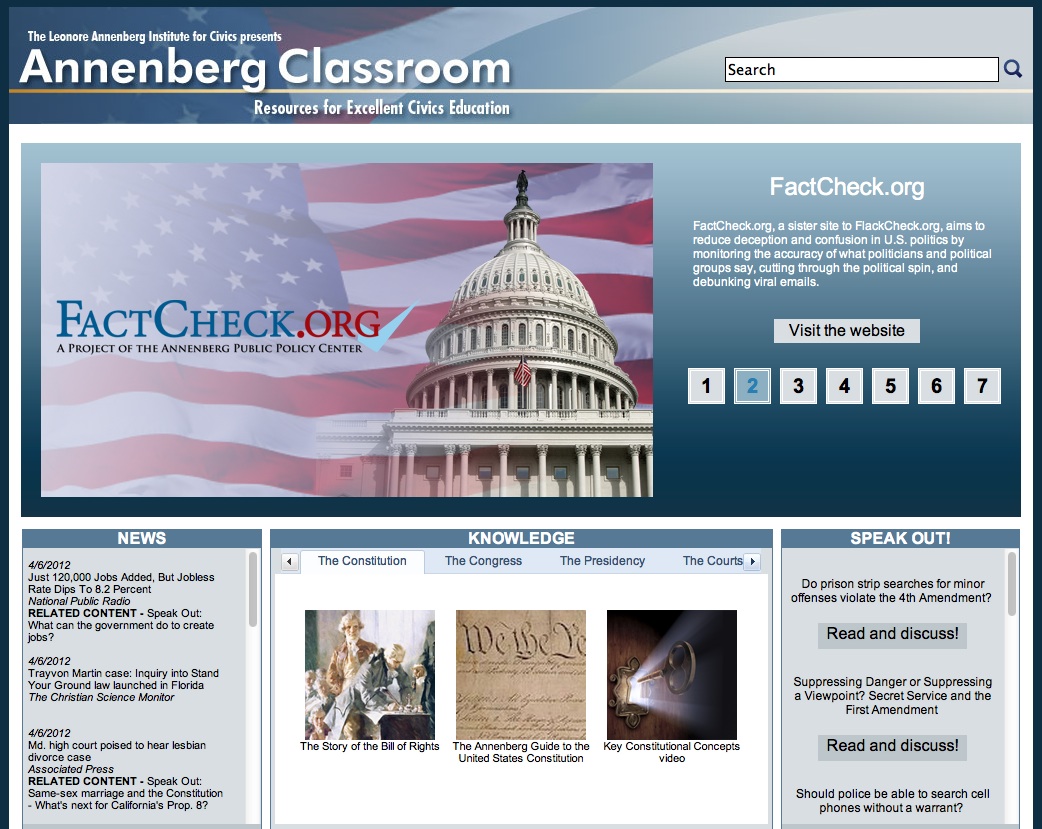

This project was established in 2001 by the Annenberg Foundation to advance public understanding of and appreciation for democracy and to address current affairs, mostly concerning the US. Divided in topic and sub-topics, users can learn a lot about the Constitution and the Supreme Court, Economy and Free Speech, and many more issues of vital importance for citizen participation in today’s life. The Annenberg Classroom content is provided by its several-partner network, including the National Constitution Center, Student-Voices, FactCheck.org and others, thus providing a vast collection of inter-related info and resources. Each topic or section offers in fact access to a series of resources directly provided from or pointing to the various partner organizations. Aiming at teachers and student of any level, this website features a great level of usability, including many graphical elements, photos and visual aids, as well as window and roll-over menus: a dynamic structure providing a positive experience for any user. It also features an advanced search facility and many audio, video, and full-text lesson packages ready for free downloading. Among its interactive features, users can freely join various discussion fora, ask the expert or a Supreme Court Justice or browse a comprehensive library, spanning from history to language arts to science and technology.
Annenberg Classroom
A comprehensive collection of educational resources and teaching aids


Center for Distributed Learning
Knowledge, applications and tools supporting learning processes

Founded in 1997, the Center for Distributed Learning (CDL) at the California State University aims at disseminating best practices for e-learning among educational communities by identifying learning related problems and applying technology to support good teaching. In this respect, it offers various demonstration projects and interesting multimedia tools to help people with little experience in planning and developing learning objects. The website is organized in three sections concerning the professional development, the digital content and the e-learning framework. In each section, projects’ related materials, and software demos can be easily browsed for free while software applications are available only to the CDL’s community and partners. Links to other external resources and related webpages are available as well. The website also include Merlot, a free and open webresource designed for faculty and students of higher education, that offers links to online learning materials. Particular emphasys is given to the e-portfolio concept as the mailstone of the teaching commons. Participation is free but registration is required. The CDL has been recognized for its contributions to education by such organizations as the New Media Consortium.

Come i Big Data stanno trasformando i servizi per animali su Kpet per un migliore supporto
Per ottenere risultati straordinari, è fondamentale l’adozione di algoritmi predittivi che analizzano il comportamento e le preferenze dei nostri amici a quattro zampe. Questi strumenti permettono di anticipare le necessità dei pet, migliorando così l’offerta di prodotti e servizi.
La personalizzazione assume un significato nuovo, trasformando l’interazione tra le aziende e i proprietari di animali domestici. Attraverso una raccolta accurata di informazioni, le aziende possono creare esperienze uniche e su misura, rispondendo in modo mirato alle esigenze specifiche di ogni cliente e del suo animale.
In questo panorama innovativo, l’uso degli insight diventa un elemento chiave per ottimizzare ogni aspetto della relazione con il cliente. Analizzare dati significativi non solo contribuisce al miglioramento dei servizi, ma favorisce anche un maggiore legame tra gli umani e i loro animali, creando un ambiente più soddisfacente per entrambi.
Ottimizzazione delle Assicurazioni per Animali tramite Data Analytics
Utilizzare algoritmi predittivi per analizzare il comportamento degli animali domestici consente alle compagnie assicurative di offrire polizze personalizzate. L’analisi degli storici di salute, attività fisica e abitudini alimentari fornisce informazioni chiave per definire pacchetti assicurativi su misura per ogni animale.
La personalizzazione è un fattore chiave nel settore delle assicurazioni per animali. Integrando dati provenienti da dispositivi indossabili, le compagnie possono monitorare la salute e il benessere degli animali, aggiungendo valore ai servizi offerti e migliorando la soddisfazione del cliente.
Insights raccolti attraverso l’analisi dei dati permettono di comprendere meglio le esigenze degli utenti. Ad esempio, identificando pattern comuni nelle richieste di risarcimento, i fornitori possono migliorare l’esperienza utente, semplificando il processo di richiesta e riducendo i tempi di attesa.
| Tipo di Dato | Dati Raccolti | Utilizzo |
|---|---|---|
| Salute | Storia medica, appunti veterinari | Prima di sottoscrivere l’assicurazione |
| Attività | Informazioni su movimento e gioco | Personalizzazione della polizza |
| Comportamento | Abitudini alimentari e di socializzazione | Aggiornamento delle condizioni di polizza |
L’implementazione di strategie basate su analisi predittive non solo riduce i costi operativi, ma crea anche opportunità per previsioni più accurate sui rischi. Ciò si traduce in premi più competitivi e in una maggiore trasparenza per i clienti.
Infine, l’integrazione di feedback continui attraverso survey e interazioni dirette consente un ulteriore affinamento del servizio. Ogni feedback rappresenta una fonte preziosa di dati per ottimizzare l’offerta assicurativa e affinare le politiche aziendali mirate.
Personalizzazione dei Servizi di Cura per Animali attraverso l’Intelligenza Artificiale
L’implementazione di algoritmi predittivi consente una maggiore personalizzazione dei programmi di assistenza per gli animali. Grazie all’analisi approfondita dei dati, gli operatori possono ottenere insight significativi riguardo alle esigenze specifiche di ciascun animale. Questa distinzione aiuta non solo a migliorare la salute e il benessere degli animali stessi, ma offre anche un servizio più mirato e soddisfacente per i proprietari.
Integrando l’intelligenza artificiale nelle piattaforme dedicate, si crea un ambiente dove le raccomandazioni possono essere adattate in base alla storia clinica, alle preferenze alimentari e ai comportamenti degli animali. Le aziende possono così personalizzare le offerte e le comunicazioni, creando un legame più forte con i clienti. Scopri di più su https://kpet-it.com/ per vedere come questa tecnologia può trasformare l’assistenza agli animali in un’esperienza unica e altamente personalizzata.
Analisi Predittiva per la Prevenzione delle Malattie nei Pets
Implementare un sistema di analisi predittiva può rivelarsi efficiente per anticipare patologie comuni tra gli animali domestici. Attraverso algoritmi avanzati, è possibile raccogliere e analizzare i dati sulla salute degli animali, trasformando numerose informazioni in insight utilizzabili. Ciò consente di personalizzare i programmi di assistenza sanitaria, garantendo una risposta rapida alle esigenze specifiche di ogni animale.
Grazie a questo approccio, le tendenze di salute possono essere monitorate in tempo reale, facilitando l’individuazione precoce di eventuali problemi. Ad esempio, l’analisi dei comportamenti alimentari o delle attività fisiche consente di rilevare deviazioni significative, segnalando possibili malattie prima che si manifestino clinicamente. La personalizzazione del trattamento offre opportunità uniche per ciascun animale, contribuendo a un miglioramento complessivo del benessere.
- Raccolta di dati storici sulle visite veterinarie.
- Analisi dei cambiamenti comportamentali e fisici.
- Identificazione delle malattie più comuni in base all’età e alla razza.
- Creazione di avvisi automatici per i proprietari in caso di anomalie.
Integrazione di Feedback degli Utenti per Migliorare l’Offerta di Servizi
Analizzare le recensioni degli utilizzatori permette di identificare rapidamente le preferenze e le necessità. Questo approccio permette di ottimizzare le proposte in modo mirato.
Utilizzando algoritmi predittivi, si possono estrarre informazioni significative dalle valutazioni per anticipare le tendenze. I dati aggregati possono rivelare modelli di comportamento.
Il trend di salute è un indicatore fondamentale per comprendere il benessere degli animali. Monitorare questi indicatori aiuta a proporre soluzioni adatte ai bisogni specifici dei clienti.
Implementare sondaggi periodici consente di raccogliere opinioni fresche e rilevanti. Le risposte ricevute offrono spunti preziosi per il miglioramento continuo.
Le piattaforme digitali possono integrare strumenti di feedback in tempo reale. Questo consente di rispondere prontamente ai cambiamenti nelle preferenze degli utenti.
Oltre agli algoritmi predittivi, fornire statistiche personalizzate create sulla base del feedback ricevuto rappresenta una strategia vincente. Gli utenti si sentiranno ascoltati e più coinvolti.
Infine, il lavoro continuo sull’analisi dei dati aiuta a creare un circolo virtuoso. Con ogni nuova informazione, la qualità dell’offerta diventa sempre più elevata.
Domande e risposte:
Qual è l’importanza dei Big Data per i servizi per animali su Kpet?
I Big Data giocano un ruolo significativo nel migliorare i servizi per animali su Kpet, consentendo agli operatori di analizzare grandi volumi di dati relativi alle esigenze degli animali e alle preferenze dei clienti. Questo porta a servizi più personalizzati e mirati, migliorando la soddisfazione dei clienti e il benessere degli animali.
Come Kpet utilizza i Big Data per analizzare il comportamento degli animali?
Kpet raccoglie dati comportamentali sugli animali, come attività fisica e modelli alimentari, attraverso dispositivi connessi. Analizzando questi dati, la piattaforma è in grado di identificare tendenze e anomalie nel comportamento, fornendo consigli utili ai proprietari e ai professionisti del settore.
Quali vantaggi offre l’uso dei Big Data ai proprietari di animali su Kpet?
L’uso dei Big Data su Kpet offre ai proprietari di animali vantaggi significativi, tra cui la possibilità di ricevere raccomandazioni personalizzate su cibo, attività fisica e cure veterinarie. Inoltre, i proprietari possono monitorare la salute dei loro animali in tempo reale, migliorando la qualità della vita degli animali domestici.
In che modo i Big Data contribuiscono a migliorare i servizi veterinari su Kpet?
I Big Data aiutano a ottimizzare i servizi veterinari su Kpet attraverso l’analisi delle cartelle cliniche e delle storie mediche degli animali. Questa analisi consente ai veterinari di fare diagnosi più accurate e di offrire trattamenti più mirati, contribuendo a una cura migliore e più tempestiva.
Ci sono sfide nell’integrazione dei Big Data nei servizi pet su Kpet?
Sì, ci sono diverse sfide nell’integrazione dei Big Data nei servizi pet su Kpet, incluso il problema della privacy dei dati e la necessità di avere infrastrutture tecnologiche adeguate. È fondamentale affrontare queste questioni per garantire un uso responsabile e sicuro dei dati sui clienti e sui loro animali.
Qual è il principale vantaggio dei Big Data per i servizi pet su Kpet?
I Big Data permettono a Kpet di analizzare una grande quantità di informazioni raccolte da vari servizi e utenti. Questo processo aiuta a identificare le tendenze e le preferenze degli utenti, migliorando l’offerta dei servizi pet. Ad esempio, Kpet può capire quali prodotti o servizi sono più richiesti e personalizzare le proposte per soddisfare al meglio le esigenze dei clienti.
Creating a Minimalist Wardrobe with Key Tips for Your Capsule Collection
Begin by selecting versatile pieces that seamlessly blend into your existing style. Focus on items that can be layered or dressed up or down, allowing for maximum use in various scenarios. This thoughtful organization not only simplifies your choices each day but also enhances your personal aesthetic.
Consider incorporating sustainable clothing into your selection. Investing in eco-friendly materials not only contributes positively to the environment but also ensures long-lasting quality. By prioritizing durability, you create a harmonious closet that reflects both responsibility and elegance.
Reassess your current collection regularly, removing items that no longer serve a purpose. This practice aids in maintaining clarity within your space, fostering an organized atmosphere that makes dressing a pleasure. Refined selections lead to a streamlined experience, allowing your true style to shine through effortlessly.
Identify Your Personal Style and Needs
Begin with a thorough assessment of your current garments. Analyze what you wear regularly. This will help you pinpoint your aesthetic preferences and functional requirements.
Consider drawing inspiration from fashion icons, social media, or lookbooks. Pay attention to color palettes, patterns, and silhouettes that resonate with you the most. Curating a mood board can provide clarity.
Reflect on your lifestyle. Are you frequently attending formal events, or is your daily routine casual? Recognizing your needs for different occasions will guide your selections toward the most practical pieces.
Evaluate your existing items in relation to sustainable clothing choices. Opt for fabrics and brands that align with your values, ensuring that your selection contributes positively to the environment while enhancing your appearance.
Organization plays a crucial role; arrange your space to visually display your favorite items. This can inspire creativity and make getting dressed a more enjoyable process.
Conduct a color analysis to discover which shades complement your skin tone. This knowledge will help you make choices that elevate your overall look and ensure that every piece is harmonious with others.
Think long-term. Aim for versatility in your selections–pieces that can be mixed and matched for various outfits. This approach not only expands your options but also supports a sustainable lifestyle.
Lastly, be mindful of your emotional connection to clothing. Select items that not only express your style but also make you feel good. This emotional aspect ties into the journey of finding what truly suits you.
Choose a Color Palette that Works for You
Select a cohesive color palette that reflects your individual aesthetic and enhances your personal style.
Consider incorporating neutral tones like beige, gray, and navy as foundational pieces. These hues are versatile and pair well with various outfits.
Utilize sustainable clothing brands that offer eco-friendly fabrics in colors you love. This choice not only supports ethical fashion but also aligns your wardrobe with your values.
Accent colors, such as muted pastels or rich jewel tones, can be added for visual interest. These shades should resonate with your personality while still maintaining harmony with your base colors.
Experiment with one or two bold colors. These can bring life to your ensemble without overwhelming the overall look.
Remember that fabrics and textures also influence how colors appear. Opt for pieces that showcase your selected palette beautifully, adapting to different occasions and moods.
Ultimately, a well-thought-out color scheme simplifies outfit coordination and expresses your unique sense of style while promoting sustainability in fashion.
Select Versatile Pieces for Maximum Outfits
Choose clothing that offers flexibility. Items such as a classic white shirt or a tailored blazer can easily adapt to various occasions, making them invaluable in your clothing array. These staples can seamlessly transition from daywear to evening attire, providing you more styling options with fewer pieces.
Sustainable clothing is not just environmentally friendly; it also encourages thoughtful consumption. Investing in high-quality, timeless fashion ensures longevity, allowing you to enjoy these pieces season after season. Look for brands that prioritize ethical practices and durability to enhance your collection.
- Opt for neutral tones like beige, navy, and grey that pair well with numerous other shades.
- Incorporate accessories that can redefine an outfit, such as scarves or statement jewelry.
- Layering pieces, like lightweight cardigans or versatile jackets, can add depth to your attire.
Consider how each item can be mixed and matched. Invest in a few standout garments that can easily combine with your established collection. For more ideas on creating a stylish ensemble, visit https://morningcoffeewithdee.com/.
Establish a Regular Review and Update Process
Set a fixed schedule to examine your clothing choices regularly. Evaluate items monthly or seasonally to keep your style fresh and relevant.
Remove anything that no longer resonates with your current fashion sense. This promotes a streamlined collection and encourages conscious choices.
Assess the condition of each piece. Look for wear and tear, and decide if repairs are worth the effort. Maintaining quality aligns with sustainable clothing practices.
Consider incorporating new styles that complement existing items. Updating your collection allows for creativity while ensuring items work harmoniously together.
Document your preferences over time. Journals or digital notes can help track what worked and what didn’t, guiding future purchases towards a more cohesive aesthetic.
Engage in clothing swaps with friends or community members. This fosters a sustainable approach, allowing others to enjoy what you no longer need, while refreshing your own attire.
Adjust your view on trends. Focus on timeless pieces that can adapt to various occasions, ensuring your style remains relevant without frequent updates.
Question-answer:
What is a minimalist wardrobe?
A minimalist wardrobe refers to a collection of clothing items that are intentionally chosen to be versatile and functional. This approach encourages individuals to have fewer pieces that can be mixed and matched easily, allowing for a more streamlined and efficient dressing routine.
How do I begin creating my own capsule wardrobe?
To start building a capsule wardrobe, assess your current clothing collection. Identify pieces that you frequently wear and love, while getting rid of items that don’t serve a purpose in your daily life. Focus on selecting a core group of items that can be mixed to create various outfits, such as neutral tops, a pair of jeans, and versatile shoes.
What types of clothing should I include in my capsule collection?
Include versatile basics like solid color t-shirts, a reliable pair of jeans, a classic blazer, and a little black dress. Also, consider seasonal items like outerwear for winter or lightweight dresses for summer. The key is to choose pieces that complement each other and can transition between different occasions.
How can I maintain my minimalist wardrobe throughout the year?
Regularly review your wardrobe to ensure it still reflects your needs and style. At the start of each season, consider switching out clothes that don’t fit your current lifestyle or preferences. Additionally, try to adopt a one-in-one-out policy, where you donate or recycle an old item whenever you purchase something new.
Are there any psychological benefits to adopting a minimalist wardrobe?
Yes, adopting a minimalist wardrobe can lead to reduced stress and decision fatigue. With fewer choices, the daily process of getting dressed becomes quicker and less overwhelming. This simplicity often translates into a clearer mindset and can enhance overall satisfaction with your personal style, allowing more focus on what truly matters in your day-to-day life.
What are some key pieces to include in a minimalist wardrobe?
A minimalist wardrobe typically includes versatile and timeless items. Key pieces often consist of a good-quality white shirt, a pair of tailored trousers, a classic little black dress, a denim jacket, and comfortable shoes like loafers or ankle boots. These items can be mixed and matched to create different outfits for various occasions, making your wardrobe more functional and streamlined.
How can I determine which clothes to keep or discard when building a capsule collection?
To decide what to keep or discard, ask yourself a few questions about each item. Consider factors such as how often you wear it, whether it fits well, and if it matches with other pieces you own. If an item hasn’t been worn in the past year or doesn’t fit your current style, it may be time to let it go. Keeping a record of outfits you enjoy can also help you identify what works best for your lifestyle and preferences.
Czy PayPal w kasynach online to odpowiedni wybór dla każdego gracza
Wybór odpowiedniego sposobu płatności w świecie gier hazardowych online ma ogromne znaczenie. W zależności od preferencji graczy, niektóre metody mogą okazać się bardziej odpowiednie od innych. Skorzystanie z platformy, która zapewnia bezpieczeństwo, kontrolę wydatków i komfort gry, staje się kluczowym elementem dla osób zróżnicowanych pod względem typów graczy. PayPal jako opcja płatności wydaje się być popularnym wyborem, ale warto zastanowić się nad jej zaletami i wadami w kontekście różnych uwarunkowań finansowych.
Wielu graczy poszukuje nie tylko wygody, ale też pewności, że ich fundusze są w pełni zabezpieczone. Możliwość łatwego zarządzania wydatkami może być istotnym atutem, zwłaszcza dla tych, którzy chcą uniknąć nadmiernych wydatków. Dzięki rozbudowanej technologii, korzystanie z kasyno z paypal może być dla niektórych idealnym rozwiązaniem. Niemniej jednak, każdy powinien rozważyć, czy taka metoda płatności rzeczywiście odpowiada jego potrzebom i oczekiwaniom.
Dokonując wyboru metody płatności, nie można zapominać o wymaganiach finansowych i zabezpieczeniach, jakie oferują różne platformy. W związku z tym, kluczowe jest, aby każdy gracz zastanowił się, czy gra z użyciem PayPal jest rzeczywiście dostosowana do jego stylu życia oraz podejścia do hazardu. W tym kontekście analiza pozornie drobnych detali może prowadzić do bardziej świadomego i odpowiedzialnego podejścia do gier hazardowych.
Bezpieczeństwo transakcji w środowisku hazardowym

Bezpieczeństwo transakcji finansowych stanowi kluczowy aspekt w kontekście gier opartych na zakładach. Korzystanie z popularnych metod płatności, takich jak systemy elektroniczne, spełnia oczekiwania wielu graczy, którzy pragną mieć poczucie pewności. W praktyce to oznacza, że różne usługi, które zapewniają szybkie i zabezpieczone transfery, są coraz bardziej pożądane.
Przykładowo, wprowadzenie odpowiednich uwarunkowań do procesu płatności oraz zwrócenie uwagi na kontrolę wydatków umożliwia graczom zarządzanie swoimi finansami. Monitorowanie i analiza wydawanych środków staje się skutecznym narzędziem dla tych, którzy decydują się na aktywności w obszarze zakładów, co z kolei zwiększa ogólne bezpieczeństwo transakcji.
Preferencje graczy mogą różnić się w zależności od ich doświadczenia i podejścia do hazardu. Te różnice w wymaganiach finansowych są istotnymi czynnikami kształtującymi wybór metody wpłaty. Dobrze zrozumiane potrzeby graczy mogą prowadzić do lepszej edukacji o hazardzie oraz świadomego podejścia do podejmowanych decyzji.
| Typ gracza | Preferencje płatności | Bezpieczeństwo |
|---|---|---|
| Rekreacyjny | Proste metody | Wysokie |
| Profesjonalny | Zaawansowane opcje | Bardzo wysokie |
| Nowicjusz | Podstawowe znaczenie prostoty | Średnie |
Nie należy jednak zapominać o wadach rozwiązania, które mogą się pojawić przy wyborze niektórych platform płatności. Pojawienie się problemów, takich jak opóźnienia w transakcjach czy dodatkowe opłaty, może negatywnie wpłynąć na komfort zabawy. Warto być tego świadomym, by unikać nieprzyjemnych niespodzianek i czuć się pewnie podczas korzystania z różnych usług.
Podsumowując, bezpieczeństwo transakcji przy korzystaniu z nowoczesnych metod płatności w grach hazardowych to zagadnienie wymagające uwagi. W trosce o komfort użytkowników oraz ich finansową stabilność, edukacja na temat dostępnych opcji płatności oraz zrozumienie typów graczy mogą przyczynić się do lepszego doświadczenia w tej dziedzinie.
Jakie są opłaty związane z korzystaniem z PayPal w kasynach online?
Wybór metody płatności w środowisku hazardowym może znacząco wpłynąć na komfort gry. Uwarunkowania ekonomiczne i preferencje użytkowników dotyczące wygody mogą skłonić graczy do korzystania z popularnych rozwiązań, takich jak portfel internetowy. Opłaty związane z używaniem PayPal mogą jednak różnić się pomiędzy platformami, co należy wziąć pod uwagę, planując swoją strategię.
Wszystkie transakcje wiążą się z pewnymi kosztami, a PayPal nie jest wyjątkiem. Wiele kasyn może pobierać dodatkowe prowizje za wpłaty lub wypłaty, co jest istotnym czynnikiem dla różnych typów graczy. Dokładne zapoznanie się z regulaminem wybranej platformy jest kluczowe, aby nie napotkać niespodziewanych wydatków.
Zalety korzystania z tego portfela to przede wszystkim szybkość oraz bezpieczeństwo. Jednak przy tym wszystkim warto zdawać sobie sprawę z ewentualnych wad, które mogą obejmować opłaty. W zależności od operatora, stawki różnią się, dlatego edukacja o hazardzie i analiza dostępnych opcji są niezbędne.
Jednym z najczęstszych problemów są wymagania finansowe. W przypadku wypłat, kasyna mogą egzekwować minimalne kwoty, co może charakteryzować się różnymi stawkami. Niekiedy gracze mogą również napotkać trudności w szybkim dostępie do swoich wygranych z powodu wewnętrznych regulacji dotyczących transakcji.
Kontrola wydatków jest kluczowa, szczególnie w kontekście gier. Używając PayPal, niektórzy gracze mogą skorzystać z opcji monitorowania swoich finansów, co w dużej mierze wpływa na ich decyzje wydatkowe. Zrozumienie, jakie mogą być związane z tym opłaty, sprzyja lepszemu zarządzaniu budżetem.
Kiedy porównujemy różne metody płatności, trzeba pamiętać, że PayPal jest bardzo popularny wśród graczy ze względu na wygodę. Mimo to, niektóre osoby mogą odczuwać negatywne aspekty związane z kosztami, które mogą wpływać na ich decyzje. Wiedza na temat tych opłat jest istotna dla świadomego korzystania z tego narzędzia.
Dla graczy, którzy preferują natychmiastowe transakcje, PayPal wydaje się doskonałym rozwiązaniem. Jednak nie można zapominać o kosztach związanych z korzystaniem z tego portfela, które mogą wpłynąć na ostateczny wynik finansowy. Warto rozważyć różne metody płatności, aby maksymalizować zyski.
Podsumowując, korzystając z portfela internetowego, gracze muszą zrozumieć opłaty oraz związane z nimi konsekwencje. Dokładna analiza wymagań finansowych oraz opłat to krok w stronę lepszego zarządzania swoimi środkami. Wiedza i świadomość są kluczowe, aby uniknąć nieprzyjemnych niespodzianek podczas zabawy. Idealne jest znalezienie równowagi między komfortem a kosztami transakcji.
Czy PayPal jest akceptowany we wszystkich kasynach online?

Wiele osób poszukujących platform hazardowych zastanawia się, które metody płatności są najbardziej odpowiednie dla ich potrzeb. W przypadku portfela elektronicznego, jakim jest PayPal, komfort użytkowania i bezpieczeństwo stanowią kluczowe zalety. Mimo to, nie każda witryna akceptuje tę formę transakcji, co wynika z różnych uwarunkowań prawnych i finansowych. Gracze powinni być świadomi, że dostępność PayPal może się różnić w zależności od regionu, a także od warunków określonych przez lokalne regulacje.
Wybierając miejsce do zabawy, warto zwrócić uwagę na wymogi finansowe oraz kontrolę wydatków, jakie oferuje dana strona. PayPal pozwala na szybkie depozyty i wypłaty, co z pewnością wpływa na ogólne wrażenia. Niemniej jednak, przed podjęciem decyzji, warto zrobić małą edukację o hazardzie, aby poznać wady i zalety każdej z metod płatności. W niektórych przypadkach, inne opcje mogą okazać się bardziej korzystne dla graczy z różnymi preferencjami.
- Bezpieczeństwo: PayPal zapewnia wysoki poziom ochrony danych osobowych.
- Kontrola wydatków: Możliwość ustawienia limitów wydatków sprawia, że gracze łatwiej zarządzają swoimi finansami.
- Dostępność: Niekiedy inne metody mogą oferować lepsze warunki dla graczy.
Pytania i odpowiedzi:
Czy gra w kasynach online z PayPal jest bezpieczna dla graczy?
Tak, korzystanie z PayPal w kasynach online jest ogólnie uważane za bezpieczne. PayPal stosuje zaawansowane metody szyfrowania danych, co minimalizuje ryzyko utraty środków. Dodatkowo, PayPal oferuje różne mechanizmy ochrony użytkowników, takie jak możliwość odzyskania środków w przypadku oszustwa. Niemniej jednak, gracze powinni zawsze upewnić się, że korzystają z renomowanych kasyn online z odpowiednimi licencjami.
Czy wszyscy gracze mogą korzystać z PayPal w kasynach online?
Niestety, nie wszyscy gracze mogą korzystać z PayPal, ponieważ dostępność tej metody płatności różni się w zależności od kraju. W niektórych regionach PayPal nie obsługuje transakcji związanych z grami hazardowymi. Dlatego przed rejestracją warto sprawdzić, czy PayPal jest dostępny w danym kasynie oraz w danym kraju.
Jakie są zalety korzystania z PayPal w kasynach online?
Korzystanie z PayPal w kasynach online niesie za sobą wiele zalet. Po pierwsze, transakcje są zazwyczaj szybkie, co pozwala na natychmiastowe wpłaty i wypłaty. Po drugie, PayPal oferuje lepszą ochronę prywatności, gdyż nie ujawnia danych bankowych bezpośrednio kasynom. Dodatkowo, ten sposób płatności może umożliwiać korzystanie z bonusów i promocji, które nie są dostępne dla innych metod. Warto przemyśleć te aspekty przed wyborem sposobu płatności.
Czy istnieją jakieś opłaty związane z używaniem PayPal w kasynach online?
Tak, korzystanie z PayPal w kasynach online może wiązać się z pewnymi opłatami, jednak to zależy od konkretnego kasyna oraz warunków korzystania z PayPal. Niektóre kasyna mogą pobierać prowizję za transakcje, podczas gdy inne oferują bezpłatne wpłaty i wypłaty. Zawsze warto zapoznać się z regulaminem kasyna oraz opłatami związanymi z korzystaniem z PayPal przed rozpoczęciem gry.
Czy gra w kasynach online z PayPal różni się od grania w tradycyjnych kasynach?
Tak, gra w kasynach online z PayPal różni się od grania w tradycyjnych kasynach. W kasynach online gracze mogą korzystać z bardziej różnorodnych gier i większej liczby ofert, a także grać z dowolnego miejsca i o dowolnej porze. Z drugiej strony, tradycyjne kasyna oferują doświadczenia społeczne oraz atmosferę, które mogą być trudne do odtworzenia online. Wybór między tymi dwoma formami gry zależy od preferencji gracza oraz jego oczekiwań dotyczących doświadczeń związanych z hazardem.
Czy każdy gracz powinien korzystać z PayPala do gry w kasynach online?
PayPal jest popularnym systemem płatności, który może być wygodny dla wielu graczy. Oferuje szybkie transakcje oraz dodatkowe zabezpieczenia, co jest istotne w grach online. Jednak nie każdy gracz może być zadowolony z tej metody. Niektórzy mogą preferować inne opcje płatności, takie jak karty kredytowe czy przelewy bankowe, które mogą oferować inne korzyści, jak brak dodatkowych opłat. Ostatecznie, wybór metody powinien być dostosowany do indywidualnych preferencji i potrzeb każdego gracza.
Jakie są zalety i wady korzystania z PayPala w kasynach online?
Korzystanie z PayPala w kasynach online przynosi ze sobą pewne zalety. Po pierwsze, transakcje są szybkie, co umożliwia natychmiastowe wpłaty i wypłaty. Po drugie, PayPal oferuje dodatkowe zabezpieczenia, takie jak ochrona kupujących, co może zwiększać poczucie bezpieczeństwa graczy. Z drugiej strony, jedną z wad może być to, że nie wszystkie kasyna akceptują PayPala jako metodę płatności. Dodatkowo, w niektórych przypadkach mogą występować dodatkowe opłaty związane z korzystaniem z tego systemu płatności. Dlatego przed dokonaniem wyboru warto zapoznać się z warunkami konkretnego kasyna.
Data analitikası marketinq strategiyalarında müvəffəqiyyətin açaridir
Bu gün müasir biznes mühitində məlumatların düzgün analizi və istifadəsi, təşkilatların uğurunu formalaşdıran əsas amillərdəndir. Şirkətlər, müştəri davranışlarını başa düşmək və bazar tədqiqatlarını effektiv həyata keçirmək üçün innovativ analitika strategiyaları tətbiq etməlidirlər. Bununla yanaşı, statistikalar və proqnozlaşdırma imkanları, müəssisələrin bazar dinamikasına uyğunlaşmasına yardımçı olur.
Məlumatların şifrələnməsi prosesi, müştəri seqmentasiyası və məqsədli kampaniyaların planlaşdırılması üçün vacibdir. Toplama üsulları, müxtəlif analitik alətlərdən istifadə edərək, müştərilərin ehtiyaclarını daha dərindən anlamağa imkan tanıyır. Bu yanaşma sayəsində, şirkətlər öz müştəri portfelini daha dəqiq tavsiye edə bilir və bazara çıxan yeni məhsullarını müştərilərinə uyğunlaşdırma imkanlarını artırır.
Beləliklə, iGaming sektoru kimi dinamik bir sahədə, analitika şirkətlərin strategiyalarını formalaşdırmada müstəsna bir rol oynayır. Müştəri davranışlarını təhlil edərək, 1win kimi platformalar, müştəri məmnuniyyətini artıran yenilikçi xidmətlər təqdim edir. Bu, yalnız müştərilərin ehtiyaclarını ödəmək üçün deyil, həm də bazar tələblərinə uyğunlaşmaq üçün mühüm bir yanaşmadır.
Marketinq kampaniyalarının hədəf kütlə seçimi üçün məlumat analizinin tətbiqi

Hədəf kütlənin düzgün seçilməsi, uğurlu marketinq kampaniyasının əsasını təşkil edir. Müştəri seqmentasiyası, müştəri davranışlarını anlamak üçün müasir statistikalar və bazar tədqiqatları ilə dəstəklənir. Toplama üsulları arasında sorğular, intervyular və rəqəmsal platformalardan əldə edilən məlumatlar vardır. Bu üsullar sayəsində müştəri məlumatlarının dəqiq şifrələnməsi mümkündür, bu da marketinq strategiyalarını daha da gücləndirir.
- Sosial şəbəkələrdən toplanan məlumatların təhlili;
- İstifadəçi davranışlarının izlənilməsi;
- Analitik alətlərin istifadəsi ilə böyük verilənlərin emalı;
Fərdi müştəri seqmentləri haqqında anlayış, bazar ehtiyacı olan spesifik hekayə anlatma imkanlarını ortaya qoyur. Kampaniyaların təsirini artırmaq üçün resursların düzgün yönləndirilməsi vacibdir. Proqnozlaşdırma imkanları, müştəri tələblərinin dəyişməsi ilə əlaqədar strategiyaların adaptasiyasını asanlaşdırır.
Rəqəmsal reklamın ROI-nin qiymətləndirilməsində data analitikasının rolu
Rəqəmsal reklam fəaliyyətlərinin ROI-nin doğru qiymətləndirilməsi üçün effektiv məlumat toplama üsulları istifadə edilməlidir. Məlumatların yığılması, müştəri davranışlarını analiz etmək və hədəf bazarını daha dəqiq anlamaq üçün əsasdır. Bu, dəqiq bazar tədqiqatları aparmaqla mümkün olur. İstifadə edilən analitik alətlər, məlumatları toplayaraq, kampaniyaların effektini qiymətləndirmək üçün lazımi statistikaları təqdim edir.
Explore VIP tables on 1 vin for high roller thrills.
Müştəri seqmentasiyası vasitəsilə, fərqli müştəri qruplarına spesifik hədəflər qoymaq mümkündür. Bu yanaşma, reklamın daha effektiv olmasına kömək edir, çünki müxtəlif müştəri tiplərinin ehtiyacları və gözləntiləri cəlbedici bir şəkildə ələ alınır. Analitika strategiyaları, bu seqmentləri tanımaqla, proqnozlaşdırma imkanlarını artırır və şirkətlərin resurslardan daha səmərəli istifadə etməsinə şərait yaradır.
| Analiz Edilən Amil | Qiymət | Yeni View-lərin Sayı |
|---|---|---|
| Reklam | 500 AZN | 1500 |
| Müştəri İştirakı | 300 AZN | 700 |
| Satış | 800 AZN | 1000 |
Hekayə anlatma, müştəri ilə bağ yaratmaq və onlarla emosional əlaqə qurmaq üçün əhəmiyyətlidir. Məlumatların şifrələnməsi, məxfiliyin qorunması və müştəri etibarını artırmaq baxımından kritik rol oynayır. Tətbiq olunan analitik yanaşmalar, müştərilərlə daha dərin və mənalı əlaqələr qurmağa kömək edərək ROI-nin artırılmasına təsir edir.
Müştəri davranışlarının proqnozlaşdırılması üçün data analizi metodları
Müasir biznes ortamında müştəri davranışlarını anlamaq və proqnozlaşdırmaq üçün müxtəlif analitik alətlərdən istifadə edilir. Bu alətlər, müştəri seqmentasiyasını həyata keçirmək və spesifik müştəri qruplarının tələblərini daha yaxşı başa düşmək imkanı verir. Məlumatların daha doğru təhlil olunması üçün statistikalar geniş bir yer tutur, çünki statistik yanaşma müştəri davranışlarının daha yaxşı anlaşıla bilməsinə kömək edir.
Proqnozlaşdırma imkanları müştəri davranışlarının gələcəkdə necə inkişaf edəcəyini istiqamətləndirir. Bunun üçün müxtəlif toplama üsulları, məsələn, anketlər və online izleme metodları, istifadə olunur. Bu üsullar vasitəsilə toplanan məlumatlar, analitika strategiyalarının təməlini təşkil edir, beləliklə müəssisələr müştəri tələb və gözləntilərinə uyğun məhsul və xidmətlər təklif edə bilir.
Hekayə anlatma, yalnız məlumatların təqdimatı deyil, həm də bu məlumatların müştəri psixologiyasını başa düşməkdəki rolunu artırır. Effektiv hekayə anlatma metodları, müştəri davranışlarının təhlilini daha təsirli hala gətirir. Müştəri seqmentasiyası əsasında yaradılan hekayələr, hədəf kütləsini cəlb etmək və onlarla daha dərindən əlaqə yaratmaq üçün faydalıdır.
Məlumatların şifrələnməsi də mühüm bir mərhələdir, çünki müştəri məlumatlarının qorunması etibarlılığı artırır. İstifadəçilərin gizliliyinin qorunması, markaların müştəri ilə uzunmüddətli əlaqə qurmasına şərait yaradır. Bu da müştəri davranışlarının daha incə təhlilini mümkün edir, nəticədə isə uğurlu marketinq strategiyalarının tərtib edilməsini asanlaşdırır.
Nəticədə, müştəri davranışlarının proqnozlaşdırılması üçün tətbiq olunan metodlar və yanaşmalar, şirkətlərin bazar içində daha rəqabət məqsədli olmasına yardım edir. Təhlil, müştəri nöqteyi-nəzərindən məlumatlar əldə etmək və bu məlumatlardan istifadə edərək mükəmməl məhsul və xidmətlər təqdim etmək üçün əvəzsizdir. İcazə verin, bu sahədəki yenilikləri izləməyi unutmayın, çünki müştəri gözləntiləri daim dəyişir.
Satış artırılması üçün personalizasiya strategiyalarında data analitikasının istifadəsi

Müştəri davranışlarının dərindən başa düşülməsi məqsədilə müxtəlif toplama üsulları tətbiq edilir. Bu üsullar vasitəsilə əldə olunan məlumatlar bazar tədqiqatları çərçivəsində təhlil olunur və fərdi ehtiyaclara uyğun məhsul-təklif formalaşdırılır. Effektiv segmentasiya prosesləri sayəsində müştəri qrupları müəyyən edilir və onlara xüsusi yanaşma ilə xidmət göstərmək mümkün olur.
Proqnozlaşdırma imkanları, satışların artması üçün vacib olan nöqtələri ortaya çıxarır. Statistikalar əsasında gələcəkdə hansı məhsul və xidmətlərin daha çox tələb ediləcəyini müəyyən etmək, satış strategiyalarını daha dəqiq qurmağa şərait yaradır. Məlumatların şifrələnməsi isə həmçinin müştəri məlumatlarının təhlükəsizliyini təmin edərək, gizlilik prinsipinə maksimum diqqət yetirir.
Analitika strategiyaları, fərdi istifadəçi təcrübəsini zənginləşdirən hekayə anlatma metodlarından faydalanır. Bu yanaşma müştərilərlə emosional əlaqə qurmağa və onları daha uzun müddət aktiv saxlamağa imkan verir. Müxtəlif kanallardan toplanan məlumatların sintezi, satış artırmaq üçün yaradıcı və effektiv təsir vasitələrinin seçilməsində mühüm rol oynayır.
Müştəri seqmentasiyası əsasında həyata keçirilən şəxsi təkliflər, həm məhsul seçimində, həm də xidmət səviyyəsində fərqli yanaşmalar təqdim edir. Bu strategiyalar, həmçinin rəqabət üstünlüyü təmin edərək, bazarda mövqeyin güclənməsinə kömək edir. Uğurlu bir yanaşma üçün keyfiyyətli məlumatların yığılması və təhlili daim yenilənərək tətbiq edilməlidir.
Suallar və cavablar:
Data analitikası marketingdə necə istifadə olunur?
Data analitikası, marketing strategiyalarının hazırlanması və həyata keçirilməsi üçün çox vacibdir. Şirkətlər müştəri davranışlarını, bazar tendensiyalarını və satış məlumatlarını analiz edərək, müştəri ehtiyaclarını anlamaq və məhsul yerləşdirməsini daha səmərəli həyata keçirmək üçün bu məlumatlardan faydalanırlar. Məsələn, bir şirkət müştəri məlumatlarını toplayaraq, hansı məhsul və ya xidmətlərin daha çox tələb gördüyünü müəyyən edə bilər. Bu da onların marketinq kampaniyalarını düzgün hədəf qruplarına yönəltmələrinə kömək edir.
Data analitikası müştəri məmnuniyyətini necə artırır?
Müştəri məmnuniyyətini artırmaq üçün data analitikası, müştəri davranışlarını və fikirlərini izləməyə imkan tanıyır. Müştərilərdən gəlinən geri dönüşlər, onların alış-veriş vərdişləri və reaksiyaları analiz olunaraq, xidmətin və məhsulun keyfiyyətini artırmaq mümkündür. Məsələn, müştəri şikayətləri analiz edilərək, xidmət sahələrində hansı problemlərin olduğunu görmək və buna uyğun düzəlişlər etmək olar, bu da müştəri məmnuniyyətini xeyli artırır.
Data analitikası vasitəsilə hansı marketinq strategiyaları inkişaf etdirilə bilər?
Data analitikası vasitəsilə bir çox marketinq strategiyaları inkişaf etdirilə bilər. Şirkətlər, müştəri seqmentasiyasını tamamlamaqla, xüsusi müştəri qrupları üçün hədəf kampaniyaları hazırlaya bilərlər. Bununla yanaşı, satış proqnozları və bazar tədqiqatları vasitəsilə yeni məhsulları təqdim etmək üçün optimal zamanlama müəyyən edilə bilər. Eyni zamanda, rəqib analizi apararaq, bazardakı yerini gücləndirmək və yeni imkanları müəyyən etmək üçün məlumatlar istifadə edilə bilər.
Data analitikası marketinqin ROI (sərmayə geri dönüşü) necə artırır?
Data analitikası, marketing fəaliyyətlərinin ROI-nin artırılmasında müstəsna rol oynayır. Analitik mühitdə toplanan məlumatlar, hansı kampaniyaların daha səmərəli olduğunu göstərir, bu da resursların daha optimal istifadəsinə səbəb olur. Müştəri datalarının təhlili sayəsində, daha ardıcıl strateji qərarlar qəbul edilə bilər, bu da sərmayənin geri dönüşünü artırır. Əgər şirkət hansı marketinq fəaliyyətlərinin satışları artırdığını bilirsə, bu, büdcənin düzgün yönləndirilməsinə kömək edir.
Data analitikası vasitəsilə müştəri davranışlarını necə proqnozlaşdırmaq mümkündür?
Müştəri davranışlarını proqnozlaşdırmaq üçün data analitikası bir çox metodlardan istifadə edir. Məlumatların toplanması və analizi nəticəsində, müştərilərin əvvəlki alış-veriş vərdişləri, maraqları və davranışları əsasında, gələcəkdəki hərəkətləri haqqında təxminlər aparmaq mümkündür. Məsələn, alqoritmlərlə müştəri seqmentasiyası edərək, spesifik müştəri qruplarının hansı məhsullara daha çox maraq göstərəcəyini öngörmək olar. Bu da marketinq strategiyalarının daha təsirli olmasına rəvac verir.
Data analitikası marketinq strategiyalarının hazırlanmasında necə kömək edir?
Data analitikası marketinq sahəsində qərar qəbul etmə prosesini daha məlumatlı edir. Müştərilərin davranışları, alış vərdişləri və bazar trendləri barədə toplanan məlumatlar analiz edilir və bunun nəticəsində şirkətlər öz kampaniyalarını hədəf auditoriyaya uyğunlaşdırır. Beləliklə, resurslar daha məqsədyönlü istifadə olunur, reklam və promosyonların effektivliyi artır. Məsələn, satış məlumatlarını təhlil etməklə hansı məhsulların daha populyar olduğu müəyyənləşdirilə və həmin məhsullar üzərində daha çox diqqət cəlb edilə bilər.
Digital Opportunity Channel
An initiative to promote discussion over ICTs and the digital divide
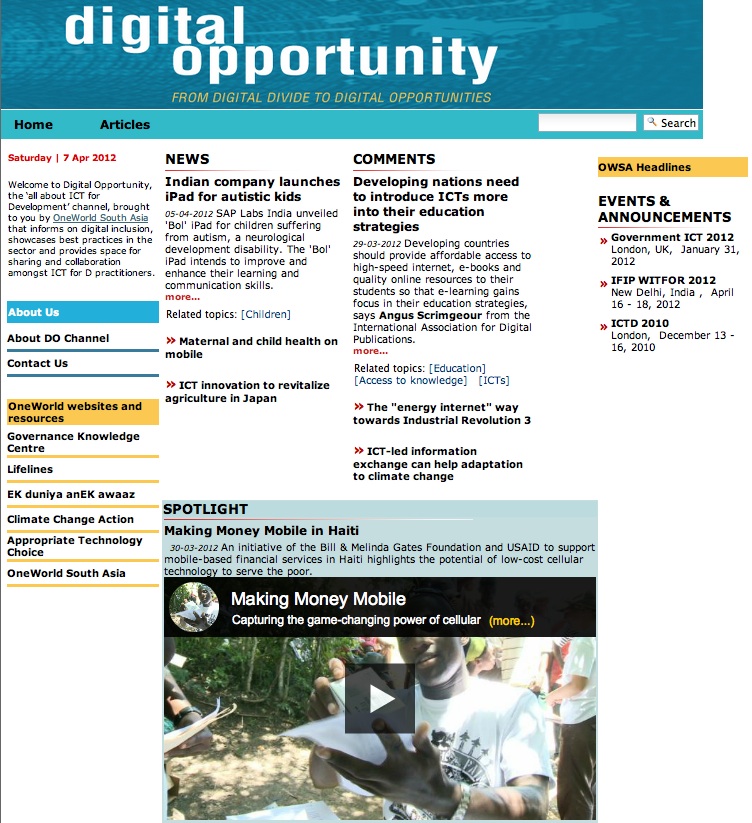
The Digital Opportunity Channel is a joint venture between two international organizations, OneWorld and Digital Divide Network, aimed at promoting discussion about the use of information technologies to encourage sustainable human development and reduce poverty. The website is maintained by the OneWorld International Governance Group (IGG) that includes members from around the world. The website represents a helpful source of information for researchers interested in global development and digital divide that can find here news updates and resources on e-government, governance and, more in general, about Icts impact on politics and society. The website offers free access service to current news on digital opportunities providing also research reports and papers in pdf format and discussion forums. Although easy to navigate and search – also thanks to an extremely sophisticated search engine and two browsing modes, by topic or country – the webpages information density may prove sometimes intimidating for the average user.
e-Learning Centre
A large collection of selected links to e-learning resources

Founded in 1994 and still managed by Jane Knight, author and analyst working in the e-learning world for over 20 years, the e-Learning Centre provides a Resource Area containing a large collection of links to e-learning resources, which are freely accessible to the public, a (password-protected) Subscribers Area containing resources that add value to the core materials at the website, and a range of other services, e.g. a Guide to e-Learning and an e-Learning Job Centre. Started as a a collection of bookmarks, the project has grown to hundreds of pages linking to thousands of links about e-learning. The links in the Resource Area are categorised into five main sections: Library, Showcase, Products and Services, Events, Bookshop. The e-Learning Center also provides a comprehensive listing of conferences, articles, tools, associations and everything else users might need to know about e-learning in a clear and friendly web structure. Materials are mostly provided free of charge, although some contents are available by paying a reasonable fee.
Economic Gains for Insurers Through the Use of Automated Adherence Monitoring
Implementing advanced solutions in health management presents a remarkable opportunity for reducing costs while promoting preventative care. By utilizing cutting-edge technologies, organizations can streamline processes that enable better tracking of patient compliance with treatment protocols, vastly improving outcomes.
This approach not only fosters healthier communities but also allows for strategic risk management. Insurance providers can anticipate potential health complications early on, thus minimizing future claims and enhancing overall financial stability. The financial implications of investing in such advancements cannot be overlooked, as they pave the way for a more sustainable operational framework.
Ultimately, the integration of these innovative practices translates into significant cost reductions. As insurers continue to explore avenues for improving patient engagement and lowering healthcare expenditures, the role of strategic monitoring becomes increasingly vital in shaping effective health strategies.
Cost Savings from Reduced Hospital Readmissions
Implementing enhanced patient care strategies leads directly to significant reduction in hospital readmissions. Focus on continuous patient engagement ensures that individuals adhere to treatment protocols, addressing issues before they escalate into hospital visits.
Effective risk management practices, combined with technology, create an environment where healthcare interventions are more timely. This proactive approach minimizes the adverse events that typically result in readmissions, creating a pathway to superior health outcomes.
Cost reduction is an immediate outcome of fewer readmissions, impacting overall healthcare expenditures positively. Each avoided readmission translates into savings for healthcare providers and payers, ultimately benefiting the entire system.
Quantifying healthcare ROI becomes more straightforward when reduction in readmission rates is factored in. Analytics can illustrate the financial advantages of investing in patient care initiatives, presenting evidence that supports further funding and resource allocation.
Creating a feedback loop where data informs treatment adjustments allows for tailored patient care. Personalized treatment plans decrease the likelihood of complications that necessitate additional hospital stays, driving down costs.
Incorporating these strategies not only saves money but also enhances patient satisfaction and trust in the healthcare system. Happy patients are more likely to adhere to prescribed treatments, leading to ongoing health improvements.
Insurance companies that prioritize these shifts in patient care can expect a competitive advantage. Investing in solutions that decrease readmission rates aligns with sustainable practices that other stakeholders will value and support.
Overall, by emphasizing comprehensive approaches, healthcare systems can achieve reduced readmission rates, ensuring long-term financial viability while promoting wellness within communities.
Enhanced Patient Engagement through Real-Time Monitoring
Implementing real-time observation systems significantly boosts patient involvement in their own health management. By providing immediate feedback on adherence to treatment plans, patients are more likely to stay committed and proactive regarding their health. This heightened engagement enables individuals to take charge, fostering a sense of responsibility for their care, which is essential for preventative care strategies.
Continuous oversight of health behaviors facilitates better communication between providers and patients. This two-way interaction helps patients feel heard and understood, encouraging them to share concerns and ask questions. Transparent data sharing about treatment progress boosts trust and loyalty, ultimately leading to improved compliance and outcomes.
Through timely reminders and alerts, healthcare providers can prevent potential health crises. Regular updates allow for swift interventions, leading to reduced emergency visits and hospitalizations. Such preventative measures directly contribute to cost reduction, benefiting both patients and healthcare systems alike.
This proactive approach also yields measurable healthcare ROI. Insurers can observe long-term reductions in expenses associated with chronic illnesses. By supporting patients in adhering to prescribed therapies, healthcare costs decrease through fewer complications and improved health management.
Lastly, empowering patients with technology enhances their engagement and transforms their experience. Increased involvement in care not only leads to better health outcomes but also cultivates a more cost-effective system. Focusing on participatory health promotes a sustainable model that benefits all stakeholders within the healthcare landscape.
Data-Driven Insights for Tailored Insurance Plans
Start harnessing data analytics to create personalized insurance strategies that cater to individual needs. Understanding patient behavior and adherence can significantly improve risk management practices while enhancing healthcare ROI.
Utilizing advanced algorithms, insurers can assess various factors that influence patient health outcomes. This metric-driven approach allows for segmentation of risk profiles, enabling organizations to develop customized plans that mitigate potential losses.
By monitoring adherence data, companies can identify critical trends and patterns. These insights help in recognizing high-risk populations which, in turn, supports targeted interventions aimed at improving compliance and health outcomes.
Cost reduction is achievable through these tailored strategies. With a proactive approach to data analysis, organizations can minimize unnecessary expenditures on ineffective treatments and streamline care delivery initiatives.
Another key advantage lies in the enhanced relationships between insurers and healthcare providers. Collaborations based on shared insights foster a unified approach to patient care, delivering improved health results and financial performance for all stakeholders.
Furthermore, success metrics can be established, illustrating the effectiveness of personalized plans. By measuring health outcomes and financial returns, insurers can continuously refine their offerings, ensuring they remain aligned with patient needs.
Visit https://smrxt.com/ for more information on innovative solutions that elevate insurance practices through data-driven insights, paving the way for sustainable growth and improved patient care.
Q&A:
What are the key economic benefits of automated adherence monitoring for insurers?
Automated adherence monitoring offers several economic advantages for insurers. Firstly, it can reduce costs associated with medication non-adherence, which often leads to increased hospitalizations and medical expenses. By ensuring that patients are taking their medications as prescribed, insurers can lower the number of claims they handle due to complications from non-adherence. Additionally, these systems can enhance patient engagement and improve health outcomes, resulting in a healthier population that requires less frequent medical intervention. Finally, insurers may gain a competitive edge by implementing technologically advanced solutions that attract more policyholders who value proactive healthcare management.
How does automated adherence monitoring influence patient outcomes?
Automated adherence monitoring positively impacts patient outcomes by promoting better medication compliance. By providing reminders and tracking adherence, patients are more likely to take their medications as directed, leading to improved management of chronic conditions and overall health. Frequent monitoring also allows healthcare providers to identify patients at risk of non-adherence, enabling timely interventions. As a result, patients experience fewer complications and hospital visits, which not only enhances their quality of life but also reduces healthcare costs for insurers and healthcare systems alike.
Are there any challenges insurers face in implementing automated adherence monitoring systems?
Insurers may encounter several challenges when implementing automated adherence monitoring systems. One major hurdle is the initial investment in technology and infrastructure, which can be substantial. Additionally, integrating these systems with existing healthcare operations and electronic health records requires careful planning and collaboration among various stakeholders. There can also be concerns regarding patient privacy and data security, as sensitive health information is involved. Educating both patients and healthcare providers on how to effectively use these systems is crucial and can take time to achieve broad acceptance.
How does automated adherence monitoring impact the relationship between insurers and healthcare providers?
Automated adherence monitoring can strengthen the relationship between insurers and healthcare providers by fostering collaboration aimed at improving patient outcomes. By sharing adherence data, insurers can provide healthcare providers with insights into patients’ medication usage, enabling them to tailor their care approaches more effectively. This transparency can enhance trust and communication, promoting a shared goal of better patient health. Furthermore, such partnerships can lead to the development of shared savings programs, where both insurers and providers benefit financially from improved adherence rates and reduced hospitalizations.
EDUCAUSE
Resources to transform education through information technologies
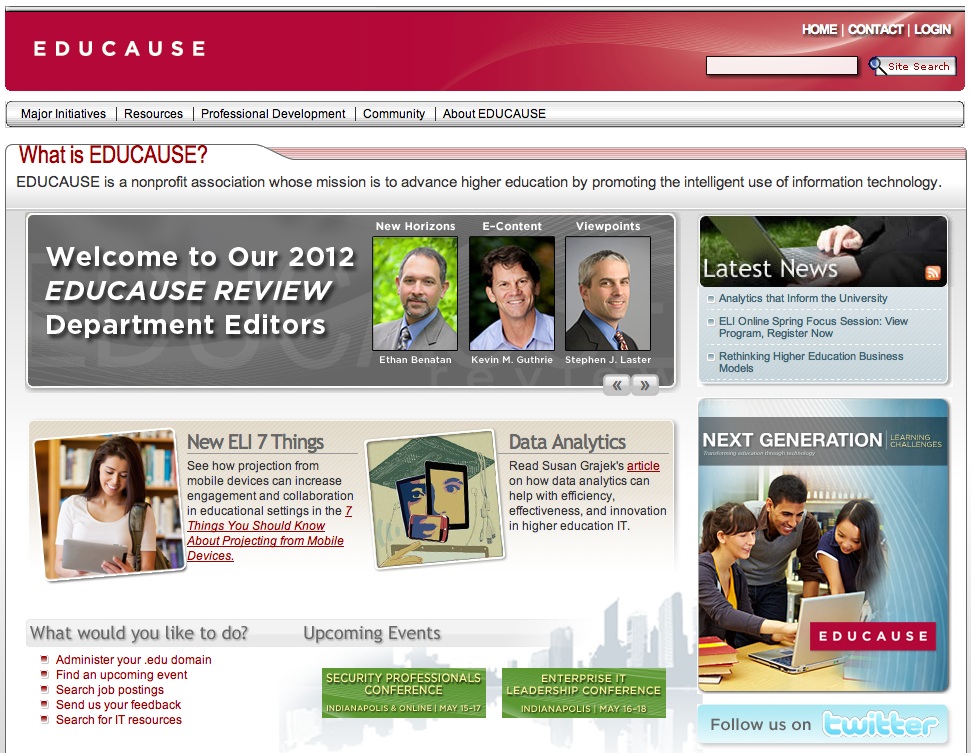
EDUCAUSE is a nonprofit association whose mission is to advance higher education by promoting the intelligent use of information technology. Membership is open to institutions of higher education, corporations serving the higher education information technology market, and other related associations and organizations. The current membership comprises more than 2,200 colleges, universities, and educational organizations, including 250 corporations, with 17,000 active members. The association’s activities include print and electronic publications, e-tools, research projects and more. Managed by an experienced team, with offices in Boulder and Washington, this website is a very useful tool for those who want to learn how to improve high education teaching methodologies by using the ICTs. Full access to the site requires an institutional affiliation, but a large amount of material is freely available, including full books in pdf format.